The All-In-One Platform to Run, Manage & Grow Your Event Business
Safety documentation, team communications, marketing, payments, CRM, and reputation management — everything your event company needs in one integrated system. From festival grounds to corporate venues.
Reliable • Synchronised • Safety • Compliance

SafetyDocs ECM is the all-in-one platform purpose-built for event management businesses. Create and manage safety documentation with real-time sync and tight permission controls, plus a full suite of marketing, CRM (ECM), communications, and payment tools to run every aspect of your events business from a single dashboard.
Click on each solution for more information and then follow the link
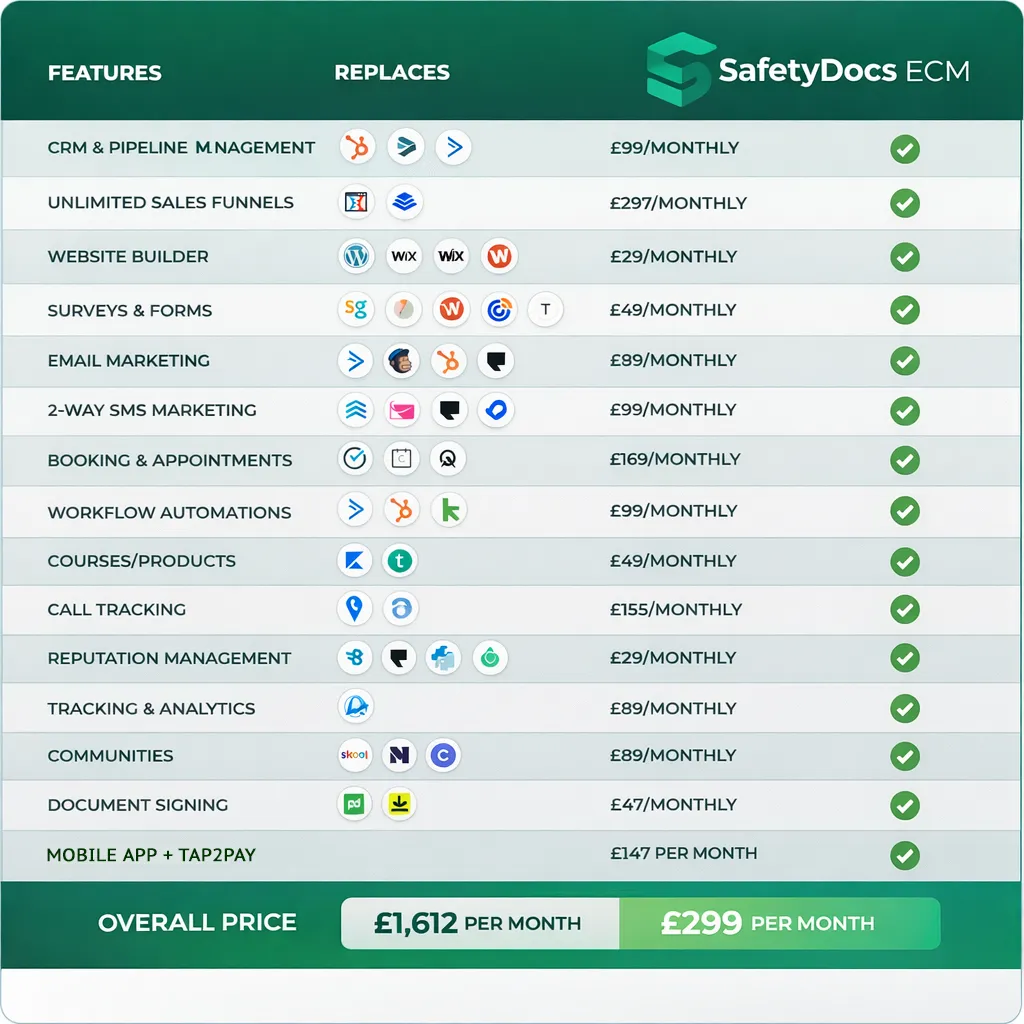
Finally, Cancel All the Other Expensive Tools
HOW IT WORKS
Stop paying for separate software for your CRM, email marketing, SMS, website, booking system, and safety documentation. SafetyDocs brings it all together for one price.
Counter Terrorism Assessment
The problem
Many venues run counter-terrorism measures from a mix of old assessments, supplier promises, and informal habits, without a clear picture of how that setup compares to what has actually gone wrong elsewhere or what government guidance expects today. When scrutiny arrives, you’re left piecing together spreadsheets and memories instead of showing a single, defensible view of how you prevent, detect, and respond.
The solution
Threat analysis gives venues a structured audit of their current counter-terrorism posture, grounded in patterns from historic attacks and aligned with up-to-date recommendations from official government sources. You move from scattered reassurance to evidence-led gaps, priorities, and next steps, so leadership, security, and operations are working off the same risk picture, not three different stories.
Risk Assessments
The problem
Risk assessments are usually built in Word, emailed about, and out of date before gates open—so on-site teams often work from missing updates, misaligned contractor work, or files stuck in inboxes. When anything changes, version chaos returns and nobody can be sure which plan is real.
The solution
Risk assessments stay live, connected, and current in one place, tied to contractors and activities so updates reach the right people. Your site team and office share the same truth, so when the plan changes, the risk picture changes with it.
Safety Plans
The problem
Safety plans splinter across PDFs for the council, insurers, production, and informal channels—so what you promised on paper may not match what crews actually do. When communication splits, handovers fail and you struggle to assemble coherent evidence under scrutiny.
The solution
SafetyDocs keeps structure, responsibilities, and dependencies in one coherent narrative, linked to the documents and people they depend on. Updates stay traceable so you can stand behind a single, consistent story.
Incident Reporting
The problem
Incidents are often captured late or in scattered notes, so details fade and near-misses never get logged—robbing you of the chance to fix issues before harm. Poor communication after an incident slows response and makes follow-up with authorities or insurers harder than it needs to be.
The solution
Structured reporting captures what happened, who was involved, and what was done—then routes it to the right roles without relying on one overloaded phone. You get timely records and a culture where reporting is normal, not a panic.
Audit Trails
The problem
When asked who signed what and when, teams often can’t prove it, because approvals live in inboxes and renamed files instead of a system. That gap stalls renewals, drags out disputes, and leaves you unable to show you did the right thing even when you did.
The solution
SafetyDocs records actions and changes so accountability is visible—who approved, viewed, or updated what. You move from “we think we did” to a clear evidence chain without a second job in filing.
Document Syncing
The problem
Multiple “FINAL” versions mean contractors, crew, and volunteers often work from different documents—printouts, portals, and old screenshots. That gap between versions is where briefings go wrong and site reality drifts from what was approved.
The solution
Everyone pulls from the same current document set, so there are no mystery attachments or “did you get the update?” Safety and operations stay aligned because people use the files you actually approved.
Shifts & Workforce Management
The problem
Rotas, certifications, and inductions often sit in separate places—so who is on site drifts out of step with who is cleared to do the job. That misalignment leads to under-staffed critical posts, people working outside competence, or contractors who were never briefed on your rules.
The solution
Schedules, roles, and compliance connect so the right people are in the right place with visibility for leads. You spend less radio time chasing names and more confidence that coverage matches the plan.
Document Signing & Contracts
The problem
Contracts and terms scatter across drives and inboxes, so chasing signatures steals time and critical documents never return before you need them. That’s a communication failure dressed as paperwork—and it hurts when something goes wrong on site.
The solution
Request, receive, review, and approve in a tracked workflow so nothing critical slips between roles. You spend less energy herding files and more running a safe, professional show.
ECM & Pipelines
The problem
Stallholders, sponsors, contractors, and volunteers need different things at different times—but pipelines often live in spreadsheets and memory, so follow-ups aren’t shared and stories conflict. Safety commitments promised verbally never get recorded, which undermines trust and compliance.
The solution
A shared pipeline keeps conversations, commitments, and next steps visible across your team. Everyone works from one record of who agreed to what and what documents are still outstanding—so safety expectations stay part of the relationship.
Marketing & Growth
The problem
Campaigns and ticket sales can outpace operational reality—so capacity, layout, and contractor readiness don’t always move together. When marketing and ops don’t talk, visitors get wrong instructions and teams get surprised by demand or last-minute features.
The solution
Connect growth activity to the operational and compliance work it triggers so campaigns, comms, and site readiness advance together. You grow without silos that collide on opening day.
Communications Hub
The problem
On show weekend, updates scatter across radios, WhatsApp, email, and shouted briefings—so not everyone sees critical changes and some get conflicting versions. In an emergency, that noise makes it unclear who is in charge or what the official line is.
The solution
A single hub for official updates, acknowledgements, and role-based visibility keeps urgent information out of random group chats. Clarity under pressure becomes a safety outcome, not an afterthought.
Payments & Billing
The problem
Chasing payments wastes time and strains relationships when invoices never reach the right person or deposits don’t land before build week. When money and permissions misalign, you get no-shows or gate disputes exactly when you need calm operations. Client need to place an order on the day?
The solution
Payments and billing sit inside clear workflows so expectations and status are visible to everyone who needs them. Fewer surprises mean fewer awkward conversations at the worst possible moment. Staff can take payments on their phone via you company app.
Automation
The problem
The same critical follow-ups—RAMS, insurance, briefings—get dropped when everyone is juggling fifty priorities. That isn’t carelessness; it’s a system that doesn’t carry the communication load.
The solution
Automation runs reminders, routing, and handoffs so the right nudges happen at the right time. Your team spends less time chasing and more time on decisions that actually need a human.
Reporting & Analysis
The problem
After the event, insight often lives in anecdotes instead of data—so you can’t prove what improved or spot weak signals before they become incidents. Gut-feel decisions miss patterns that only show up when information is shared and visible.
The solution
Reporting turns activity into trends, bottlenecks, and compliance health you can brief stakeholders on with evidence. You improve the next edition with purpose, not guesswork.