Weather Risk Planning for Events During Live Shows
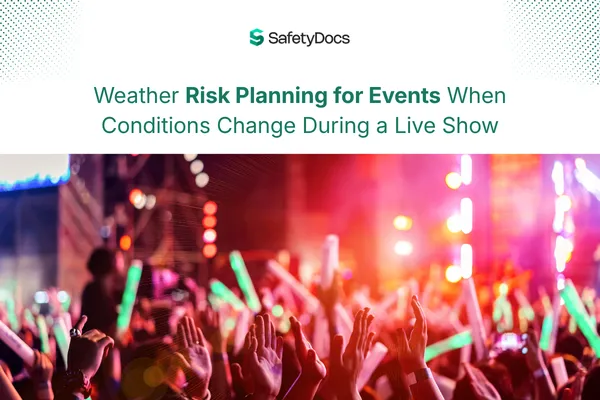
Weather Risk Planning for Events When Conditions Change During a Live Show
Live events carry a unique kind of pressure. Months of planning can be challenged in minutes when the weather shifts without warning. A clear sky can turn into heavy rain, strong winds, or extreme heat while crowds are already on site and crews are fully deployed.
This is where weather risk planning for events becomes more than a document stored in a folder. It becomes an active system that supports fast decisions, clear communication, and compliance when it matters most. For event organisers, safety officers, and responsible persons, the ability to adapt during a live show can mean the difference between controlled action and unnecessary chaos.
Why Weather Becomes the Biggest Risk During Live Events
Weather risks are often underestimated during planning stages. Forecasts look stable, contingency notes are added, and teams move on to other priorities. The problem is not a lack of awareness, but the assumption that the weather will remain predictable.
During a live show, even small changes can escalate quickly. Wind speeds affect temporary structures. Rain impacts electrical systems and ground conditions. Heat increases medical risk for staff and attendees. Cold conditions affect mobility and response times.
When weather changes mid-event, teams must act using accurate, current information. Static documents, printed plans, and outdated PDFs do not support this reality. Their slow response increases confusion and exposes organisers to compliance risk.
The Core Purpose of Weather Risk Planning for Events
Weather risk planning for events is not about predicting the weather. It is about preparing teams to respond safely and consistently when conditions shift beyond acceptable thresholds.
Effective planning focuses on three outcomes. Protecting people, maintaining operational control, and demonstrating due diligence. These outcomes depend on clarity, speed, and accuracy rather than volume of paperwork.
A strong approach ensures that everyone knows what actions to take, who makes decisions, and how updates are communicated across the site. It also ensures that changes are documented correctly, supporting accountability during inspections or post-event reviews.
Why Static Documents Fail During Live Weather Incidents
Traditional event safety files often rely on Word documents or PDFs stored in shared drives. While these formats work during early planning, they struggle during live delivery.
When weather conditions change, teams face several challenges.
Multiple versions of the same document cause confusion
Updates are not shared instantly across teams
Staff may not have access on-site or offline
Critical details like contacts or thresholds may be outdated
During a live incident, scrolling through folders or searching emails wastes valuable time. event Weather risk assessment requires tools designed for live use, not just compliance before the gates open.
Planning Weather Risks Before the Event Goes Live
Strong response during a live show starts with thoughtful preparation. Weather risks should be embedded across the event safety file rather than isolated in one section.
This includes risk assessments, method statements, emergency plans, and operational procedures. Each document should reference consistent thresholds and actions so teams do not receive mixed messages.
Before the event, organisers should clearly define.
Weather monitoring responsibilities
Trigger points for action
Escalation pathways
Communication methods
Using structured templates helps ensure nothing is missed, especially for teams managing multiple events or tight timelines.
Setting Clear Weather Action Triggers
One of the most common failures in weather risk planning for events is vague language. Phrases like poor weather or adverse conditions leave too much room for interpretation.
Clear triggers create confidence and consistency. These triggers are measurable conditions that prompt predefined actions.
Examples include specific wind speeds, rainfall levels, temperature thresholds, or lightning proximity. When these thresholds are reached, teams know exactly what to do without debate or delay.
Clear triggers support faster decision-making and reduce the emotional pressure placed on individual staff members during high-stress moments.
Responding When Conditions Change During the Live Show
Once an event is underway, conditions can change rapidly. The ability to respond depends on access to current information and authority to act.
When the weather worsens, teams must confirm three things quickly. What has changed, what action is required, and who needs to know. This is where live safety documents provide real value.
Instead of issuing verbal updates or relying on memory, changes can be recorded centrally. This ensures that everyone is working from the same information, including contractors, volunteers, and senior decision makers.
Keeping Teams Aligned During Live Weather Updates
Communication breakdown is a major risk during live weather incidents. Messages passed verbally can be misunderstood or missed entirely.
Effective weather risk planning for events includes clear communication protocols. These protocols define how updates are shared and who receives them.
Mobile access to live documents allows teams to check the latest guidance instantly. This is particularly important for staff working across large or complex sites where face-to-face updates are not practical.
Clear communication also supports compliance, as it shows that organisers took reasonable steps to inform staff of changing risks.
Managing Temporary Structures and Infrastructure
Temporary structures are especially vulnerable to weather changes. Stages, marquees, fencing, and signage all respond differently to wind and rain.
Event weather risk assessment must address these elements in detail. This includes load ratings, inspection schedules, and shutdown procedures.
During a live show, conditions may require partial closures, repositioning, or full suspension of activities. These decisions must be backed by documented plans and clear authority lines.
Live safety systems allow these updates to be recorded and shared instantly, reducing confusion and supporting safe execution.
Supporting the Responsible Person Role
In many jurisdictions, a responsible person is legally required to oversee event safety. This role carries significant pressure, especially during live incidents.
Weather risk planning for events helps support this role by providing structured guidance and documented actions. When decisions are made under pressure, having clear records helps demonstrate that actions were reasonable and proportionate.
This is particularly important when dealing with authorities, insurers, or post-event investigations. Live documentation reduces reliance on memory and protects both individuals and organisations.
Compliance Does Not Stop When the Event Starts
A common misconception is that compliance ends once plans are approved. In reality, compliance continues throughout delivery.
Weather risk planning for events must account for this ongoing responsibility. Changes made during a live show should be documented, justified, and communicated.
Using live systems supports this process without adding administrative burden. Instead of creating new documents after the fact, updates are captured as they happen.
This approach aligns with modern expectations from regulators who increasingly expect dynamic risk management rather than static paperwork.
Reducing Admin While Improving Safety
One concern often raised by event teams is the administrative load of managing live updates. Traditional systems make this a valid concern.
However, live safety platforms are designed to reduce admin rather than increase it. By syncing updates across all documents, teams avoid repetitive editing and version confusion.
For example, updating a weather action plan can automatically reflect across related documents. This ensures consistency while saving time, especially during critical moments.
How Safety Docs Supports Live Weather Risk Management
Safety Docs was built to address the challenges faced by event teams managing live risks. The platform allows organisers to replace static files with mobile-ready, live safety documents.
For event weather risk assessment, this means teams can access current plans on site, update actions in real time, and ensure everyone is working from the same information.
Templates support structured planning, while live syncing reduces the risk of outdated details. This approach helps teams stay compliant, responsive, and confident during changing conditions.
Practical Steps to Strengthen Your Weather Planning Today
Improving event weather risk assessment does not require starting from scratch. Small changes can make a significant difference.
Consider reviewing your current documents and asking.
Are weather triggers clearly defined
Can teams access plans on-site?
How are updates communicated during live changes?
Are actions documented in real time?
Addressing these questions helps identify gaps that can be resolved before the next event.
Planning for the Unexpected Builds Trust
Attendees, staff, and authorities all expect organisers to manage risks responsibly. The weather is one of the most visible tests of that responsibility.
When teams respond calmly and clearly to changing conditions, it builds trust and confidence. This trust supports smoother operations, better cooperation, and stronger reputations.
Event weather risk assessment is not about eliminating risk. It is about managing it transparently and effectively when conditions are unpredictable.
Conclusion
The events industry continues to evolve, and expectations around safety are rising. Live risk management is becoming the standard rather than the exception.
By adopting tools and processes that support real-time decision making, organisers can reduce stress, improve outcomes, and meet modern compliance expectations.
If your current approach relies heavily on static documents, now is the time to explore more responsive systems. Safety Docs offers a practical way to modernise your safety planning without unnecessary complexity.
Taking the next step toward live weather risk planning for events helps ensure your team is prepared, your documentation is accurate, and your event stays under control, even when the weather has other plans.
FAQs
1. What is weather risk planning for events?
Weather risk planning helps teams prepare actions for rain, wind, heat, or cold so safety decisions can be made quickly and consistently during live events
2. Why are live documents important during weather changes?
Live documents allow real-time updates, ensuring every team member sees the latest weather actions and safety changes without relying on outdated PDFs
3. When should weather risks be reviewed during an event?
Weather updates should be reviewed before gates open, monitored during the event, and updated immediately when conditions reach defined action thresholds
4. What problems do static weather plans cause on-site?
Static plans cannot update during an incident, while live safety documents adapt instantly, reducing confusion, delays, and compliance risks on site
5. Do small events really need weather risk planning?
Yes, even small events need weather planning, as changing conditions can impact guests, staff safety, temporary structures, and legal responsibilities