Improving Emergency Response Through Real-time Updates and Edits During Events
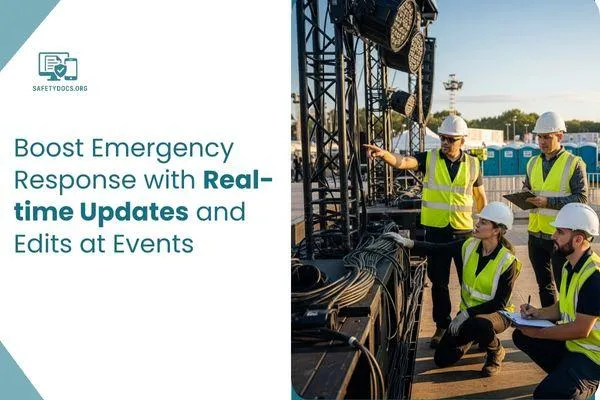
Boost Emergency Response with Real-time Updates and Edits at Events
Live events today carry more responsibility than ever before. Organisers no longer focus only on logistics, entertainment, or smooth guest experiences. They now face a bigger challenge: safeguarding lives, meeting strict safety regulations, and proving compliance to regulators and insurers. When thousands of people gather, the margin for error disappears.
This makes real-time updates and edits during events a vital element of safety planning. Instead of searching through outdated files, organisers need live, synced data that reflects current risks, contractor details, and emergency actions. In fast-moving environments, this is not simply convenient; it is essential for protecting both people and reputations.
Why Delays Put Events at Risk
Emergencies unfold in minutes, sometimes seconds. Delays in communication or reliance on outdated paperwork can quickly escalate into serious risks.
A wrong emergency contact can waste critical minutes.
Out-of-date evacuation maps confuse staff and attendees.
Contractors working from old RAMS documents duplicate tasks.
Multiple “final” versions of a file create dangerous miscommunication.
Without real-time updates and edits during events, organisers operate blindly during emergencies, risking compliance failures and exposing attendees to preventable harm.
The Shift Toward Live-Sync Safety Documents
Traditional safety planning has relied heavily on static Word documents or PDFs. These might look professional, but they are static, rigid, and slow to update. Once distributed, they quickly become outdated.
Modern platforms like SafetyDocs offer a smarter solution. By centralising safety information in one live file, any update automatically syncs across all connected documents. Staff and contractors instantly see the latest version on their devices. This change reduces duplication, removes confusion, and ensures teams act with accuracy.
For emergency response, this live-sync approach is a breakthrough. If routes, risks, or roles change, the update appears immediately, giving teams the clarity they need when pressure is highest.
The Role of Real-time Updates in Emergency Preparedness
Preparedness is more than having documents stored in folders. It requires systems that adapt, update, and inform instantly. Real-time updates and edits during events deliver that readiness in four powerful ways.
Instant Communication with Teams
Organisers can push new instructions instantly. Whether adjusting assembly points or contractor details, every team member sees the same directive without delay.
Collaboration Across Different Roles
From medical staff to security contractors, everyone works from the same live file. This removes silos, prevents overlap, and supports smoother coordination during emergencies.
Compliance with New Regulations
UK laws like Martyn’s Law place higher expectations on organisers to maintain updated safety strategies. Real-time editing ensures compliance remains active, not static.
Flexibility in Unexpected Situations
Weather changes, sudden surges in attendance, or power outages can happen at any event. With live updating, safety instructions adapt within minutes, keeping the response sharp and effective.
From Admin Burden to Smart Safety
Paperwork has always been the hidden burden of event safety. Static files create hours of admin work, endless editing, printing, emailing, and distributing. The more contractors or suppliers involved, the greater the challenge.
By switching to real-time updates and edits during events, organisers dramatically reduce admin stress. Instead of managing files, they manage outcomes. Instead of chasing documents, they keep their focus on safety and delivery.
With platforms like SafetyDocs, large-scale events with multiple stakeholders can keep every file consistent, accessible, and compliant without the paperwork panic.
Real-world Impact: How It Works in Action
Imagine a summer festival with 20,000 attendees. Suddenly, severe weather alerts appear. Traditionally, safety teams would scramble to update documents, call contractors, and share new evacuation routes through phone trees or printed sheets.
With real-time updating:
The master risk file is edited once.
Evacuation points are updated instantly.
Security and volunteers receive notifications on their mobile apps.
Attendees benefit from faster, calmer guidance.
The outcome is smoother, faster, and safer. With real-time updates and edits during events, the team avoids confusion, speeds decision-making, and protects lives.
Insurance and RAMS Compliance
Emergency response is not just about immediate safety. It also ties directly into compliance with insurers and the accuracy of Contractor Risk Assessments and Method Statements (RAMS).
Insurance providers expect up-to-date documentation that reflects real conditions. Real-time updates ensure every RAMS file or policy is current. If an incident occurs, having a single, accurate version is proof of compliance, protecting organisers against disputes or penalties.
The Mobile Advantage
Emergencies rarely occur at a desk, which makes mobile access essential. With real-time updates and edits during events, staff on the ground stay connected to updated plans without returning to offices or control rooms.
Through the SafetyDocs mobile app, teams can:
Access files offline in case of network failure.
Receive instant updates without waiting for emails.
Search safety files instantly during pressure moments.
Use live buttons for quick access to emergency contacts.
This brings clarity and speed when teams need it most.
Avoiding Common Pitfalls
Many organisers rely on tools like Dropbox or Google Drive for safety files. While these offer storage, they fall short during live events.
No version control means multiple conflicting files.
Updates in one document do not sync to others.
Access permissions are clumsy and time-consuming.
Searching for information in folders is too slow during an emergency.
By contrast, systems designed for real-time updates and edits during events are built with version control, syncing, and mobile readiness at their core.
Building Trust with Authorities and Attendees
Trust is everything in today’s event industry. Authorities want to see compliance and readiness. Attendees want to feel reassured that safety is prioritised.
Adopting real-time updates and edits during events proves that organisers:
Take proactive steps toward safety.
Maintain accurate and transparent files.
Respond quickly and effectively in emergencies.
This trust not only reduces legal and reputational risks but also strengthens long-term confidence among audiences and partners.
Preparing for the Future
Events are evolving quickly, with larger crowds, more complex venues, and stricter security expectations. Outdated systems will not keep up with these demands.
Real-time updates and edits during events represent the future of safety planning. By adopting them now, organisers stay ahead of new regulations, reduce operational risks, and deliver safer experiences for everyone involved.
Conclusion
Emergencies may be unpredictable, but responses should never be. By using real-time updates and edits during events, organisers move from reactive problem-solving to proactive, confident control.
Platforms like SafetyDocs provide the technology to cut paperwork, support compliance, and give staff the live tools they need when every second matters. For organisers, this is not just a modern upgrade; it is a life-saving necessity.
Ready to Act?
Do not let outdated systems put your event at risk. Explore how SafetyDocs supports emergency response with live-syncing, mobile-ready safety solutions.
Start your free 14-day trial today, no credit card required.
FAQs
1. Why are real-time updates important during events?
They keep attendees, staff, and emergency services informed. This reduces delays and prevents confusion.
2. How do real-time edits improve emergency response?
They allow safety teams to adjust instructions quickly. This ensures actions are accurate and timely.
3. Can Safety Docs templates support live updates?
Yes, the templates are flexible and easy to modify. You can edit them instantly as situations change.
4. Who benefits from real-time updates at events?
Organisers, contractors, and attendees all stay aligned. Everyone receives the same critical information fast.
5. Do real-time updates work for small events too?
Yes, even small events face unexpected risks. Real-time updates improve safety and build trust.
