Event Safety Management & the Incremental Paradox
Running a large event often feels like juggling hundreds of moving parts. From coordinating staff and contractors to monitoring crowd flow, safety decisions must be precise and timely. Yet, too often, venues rely on static documents and outdated PDFs, thinking more paperwork guarantees safer events.
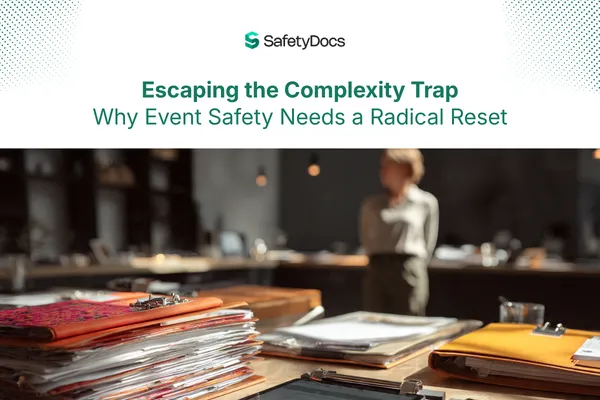
This approach has created the Incremental Paradox, a situation where every new rule, checklist, or minor update adds to a growing mountain of documents. Over time, safety systems become confusing, fragile, and ineffective in real situations.
Modern events require smarter Safety Infrastructure and practical Operational Safety Systems. These tools ensure that staff, contractors, and managers have the right information when they need it most.
The Incremental Paradox: How Safety Became Complex
The chaos in safety documentation did not happen suddenly. Every regulation, recommendation, or minor issue has added another document to the system.
Experts call this the Incremental Paradox. Each small, rational decision—adding one more PDF, creating another checklist, eventually creates a massive, unmanageable system.
Large venues now manage hundreds of contractors and dozens of document types. Files sit in emails, shared drives, or multiple local folders. This leads to "version drift," where staff cannot be sure if they are looking at the latest plan.
The Incremental Paradox also undermines Event Risk Management. It creates an illusion of control while masking gaps in real-world safety.
The Hidden Risks of Static Safety Systems
Event safety is dynamic. Crowds shift, weather changes, and risks evolve during an event.
However, most venues rely on static PDFs or printed folders. This disconnect creates the Complexity Trap, where managing files feels like managing safety.
In an emergency: Staff must navigate complex folders, wasting critical time.
During training: Buried guidance prevents staff from understanding roles fully.
Static documents break under pressure. They make Safety Compliance Systems fragile, hard to update, and difficult to defend legally.
How Complexity Damages Event Safety
There are three main consequences of relying on overly complex, static systems:
Emergency Response Delays – Staff lose precious seconds searching for outdated documents.
Ineffective Training – Workers cannot learn when instructions are scattered or irrelevant.
Legal and Compliance Risks – Organisations may fail audits or court scrutiny because documentation is inconsistent.
By ignoring these issues, venues risk Operational Safety Systems failure, which can have devastating consequences.
SafetyDocs: A Modern Approach to Event Safety
To escape the Incremental Paradox, the events industry must rethink safety completely. SafetyDocs offers a solution.
It replaces static storage with a live, structured, role-based system. Safety becomes infrastructure, not just a library of files.
Here is how it transforms Operational Safety Systems:
1. From Incremental Clutter to Single Source of Truth
SafetyDocs instantly updates information across all references.
Benefit: Eliminates version drift and duplication.
Impact: Staff access consistent, accurate information in real time.
2. From Complexity Fog to Role-Based Clarity
Staff only see what matters to their role. Stewards, contractors, and regulators access information specific to their tasks.
Benefit: Training becomes practical and efficient.
Impact: Confusion is reduced, and operational mistakes decrease.
3. From Static Fragility to Live Resilience
Traditional PDFs break when situations change. SafetyDocs allows live updates, synchronising changes for everyone immediately.
Benefit: Venues gain resilience.
Impact: Staff can act quickly, safely, and confidently.
Why Role-Based Safety Matters
Role-based clarity is more than a convenience. It aligns with the Economies of Small, a principle where simplicity improves efficiency.
For example, a steward only sees evacuation procedures, not full risk assessments. Meanwhile, a regulator views all compliance evidence without distraction.
This approach improves Event Safety Management by making guidance actionable and understandable for every user.
Operational Safety in Real Time
Modern events require Operational Safety Systems that work in real time. Static PDFs are unsuitable for dynamic environments.
Consider sudden weather changes. If documents are not updated instantly, evacuation routes, crowd movement plans, or safety measures may be outdated.
Live systems like SafetyDocs ensure updates reach all users immediately. This reduces operational friction and prevents errors.
Legal Compliance and Martyn’s Law
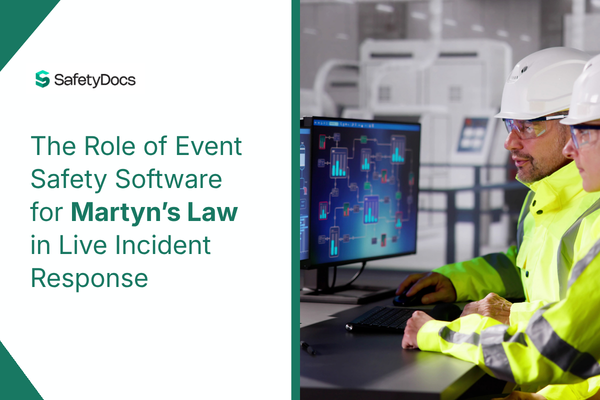
With Martyn’s Law (Terrorism (Protection of Premises) Act 2025), the stakes for venues are higher.
Venues must document protective security measures. Failing to comply can cause legal penalties and reputational damage.
Safety Infrastructure, like SafetyDocs ensures venues maintain defensible, accurate, and auditable Safety Compliance Systems. Contractors, regulators, and staff can trust the information.
Practical Tips for Escaping the Complexity Trap
Audit Current Documents – Identify outdated PDFs, duplicates, or irrelevant folders.
Adopt Live Systems – Replace static files with structured, dynamic platforms.
Use Role-Based Access – Limit information to what each person needs.
Regularly Review and Update – Even live systems require periodic checks.
Train Staff in Real Conditions – Make learning hands-on, not PDF-based.
Implementing these steps reduces complexity, improves compliance, and strengthens Event Risk Management.
Conclusion: Crossing the Simplicity Gateway
The era of complex folders and static documents is over. These relics hide inefficiency and risk.
By adopting live, structured, and user-focused Operational Safety Systems, venues move from administrative motion to genuine safety assurance.
The goal is clear: put accurate information into the hands of those who need it most. That is the ultimate benefit of escaping the Incremental Paradox.
Modern events demand smarter Event Safety Management. Systems like SafetyDocs allow venues to manage risk effectively while ensuring staff, contractors, and regulators have clear guidance.
It is time to leave the Complexity Trap behind and embrace a simpler, safer, and more resilient future.