Event Risk Assessment, Top 10 Hazards You Miss
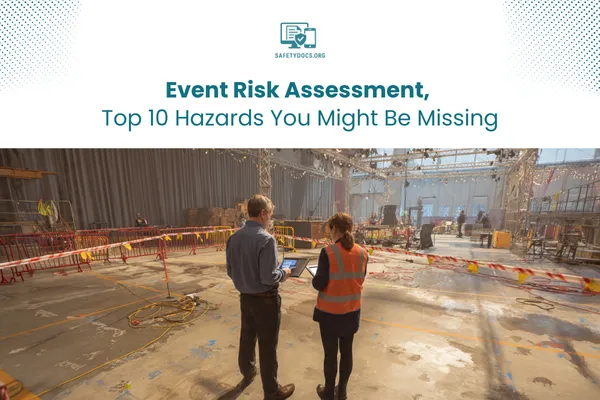
Event Risk Assessment, Top 10 Hazards You Might Be Missing
Planning an event feels exciting at first. The venue is booked. The speakers are confirmed. Tickets are selling. Everything looks perfect on paper.
But then one small oversight turns into a major issue. A blocked fire exit. An overcrowded entrance. A sudden storm with no shelter plan.
This is where many organisers get caught off guard.
An event risk assessment is not just a formality. It is your safety net. It protects your guests, your team, your reputation, and your legal standing. And if you rely on a generic event risk checklist without tailoring it to your venue, audience, and activities, you could miss hazards that matter most.
Let’s walk through the top 10 hazards event planners often overlook, and how to address them before they become real problems.
1. Inadequate Fire Safety Planning
Fire safety is one of the most critical parts of any event risk assessment. Yet many organizers assume the venue has it covered.
That assumption can be risky.
Even if a venue meets basic regulations, your specific event setup may introduce new fire hazards. Temporary stages, decorative lighting, food vendors, and electrical extensions all increase the risk.
What to Check in Your Event Risk Checklist
Clear and unobstructed fire exits
Functioning fire extinguishers and alarms
Staff trained in emergency response
Safe placement of generators and cables
If you are hosting a large gathering or operating in a temporary structure, your fire safety plan must be detailed and documented. Proper safety documentation ensures you meet compliance standards and demonstrate due diligence.
2. Poor Crowd Control Measures
Crowd control issues do not start with chaos. They start with small miscalculations.
Underestimating attendance. Narrow entry points. Poor signage. Delays at security checks. These small factors build pressure fast.
When people feel trapped or confused, panic spreads quickly. That is when accidents happen.
Signs Your Crowd Control Plan Needs Work
No clear queue management system
Limited trained stewards or marshals
Poor visibility of emergency exits
Overlapping event zones
Your event risk checklist should include detailed crowd flow mapping. Think about how guests arrive, move, gather, and exit. Safe events are not accidental. They are designed.
3. Ignoring Severe Weather Risks
Severe weather risks are often treated as unlikely. Many planners hope for the best instead of preparing for the worst.
But the weather changes fast.
Heavy rain can flood outdoor areas. High winds can destabilise temporary structures. Extreme heat can cause dehydration and heatstroke.
If your event is outdoors or partially exposed, severe weather risks must be addressed in your risk assessment.
Key Weather Considerations
Backup indoor space or shelter options
Secure anchoring of tents and stages
Clear communication plan for delays or evacuation
Access to water and shade during hot conditions
Weather plans are not about fear. They are about control.
4. Electrical and Power Supply Hazards
Temporary events often rely on generators, extension cords, and additional lighting. These setups increase the risk of electrical faults.
Loose wiring can cause trips. Overloaded circuits can cause fires. Wet conditions can lead to electric shock.
Yet electrical checks are often rushed.
Include a specific section in your event risk checklist for electrical systems. Ensure certified professionals install and inspect all temporary equipment. Label cables, secure them properly, and keep them away from public walkways whenever possible.
5. Insufficient First Aid and Medical Planning
Many organisers assume emergency services are close by. But during a large event, response time can feel long.
Minor injuries, dehydration, allergic reactions, or panic attacks are common. Without visible and accessible first aid points, small issues escalate.
Strengthen Your Medical Readiness
Provide clearly marked first aid stations
Train staff in basic emergency response
Have a plan for contacting emergency services
Keep incident reporting forms ready
Preparedness builds confidence among attendees. It also protects your organisation legally.
6. Overlooking Accessibility and Special Needs
Accessibility is not just about compliance. It is about inclusion and safety.
Blocked ramps, inaccessible toilets, or poor signage can create dangerous situations for guests with disabilities.
When conducting your event risk assessment, consider the full experience from arrival to departure.
Ask yourself:
Can wheelchair users navigate easily?
Are emergency announcements accessible to everyone?
Are assistance procedures clearly defined?
An inclusive event is a safer event.
7. Food Safety and Vendor Risks
Food vendors bring energy to events. They also introduce hygiene and contamination risks.
Improper food storage, cross-contamination, or lack of allergen labeling can lead to serious health incidents.
Even if vendors operate independently, you share responsibility as the event organiser.
Include food safety checks in your event risk checklist:
Vendor licenses and insurance verification
Proper refrigeration and hygiene standards
Clear allergen information
Safe gas and cooking equipment setup
Food safety connects directly to your brand reputation. One mistake can travel fast online.
8. Poor Communication During Emergencies
Imagine an emergency without clear instructions.
People look around. No one knows what to do. Confusion spreads faster than the problem itself.
An event risk assessment must include a communication strategy.
Your Communication Plan Should Cover
Who makes the announcement
How messages are delivered, PA, SMS, signage
Backup systems if power fails
Clear chain of command
Communication reduces panic. It keeps people calm and coordinated.
9. Contractor and Third Party Compliance Gaps
Events often involve multiple contractors. Security teams, stage builders, sound engineers, catering staff.
Each group may have its own processes. But if they do not align with your safety standards, risks multiply.
Before the event, confirm that all contractors:
Provide relevant safety documentation
Have public liability insurance
Follow your fire safety and crowd control protocols
Understand severe weather contingency plans
Consistency is key. Safety breaks down when responsibilities are unclear.
10. Incomplete or Outdated Documentation
This is the silent risk.
Many organisers create an event risk checklist once and reuse it for every event. But venues change. Guest profiles change. Regulations change.
Outdated documentation leaves gaps. And in the event of an incident, those gaps matter.
A strong event risk assessment should be:
Specific to the venue and event type
Updated regularly
Easy to access during inspections
Clear and practical, not overly complex
Professional safety documentation helps ensure nothing is overlooked. Structured, compliant documents reduce stress and improve accountability across your team.
Building a Smarter Event Risk Checklist
So how do you avoid missing these hazards?
Start by moving beyond a generic template. Your event risk checklist should reflect real-world scenarios, not just theoretical ones.
Consider including sections for:
Fire safety planning
Crowd control mapping
Severe weather risks and contingency
Medical and first aid readiness
Contractor compliance
Communication strategy
Accessibility and inclusion
Electrical and structural safety
Break each section into practical action steps. Assign responsibility. Set deadlines. Review everything before event day.
This approach transforms your risk assessment from a document into a working safety system.
The Cost of Ignoring Hidden Hazards
It is easy to think, “It will probably be fine.”
Most events run without major incidents. That creates a false sense of security.
But when something does go wrong, the consequences can be severe. Injuries. Legal claims. Fines. Reputational damage.
In today’s regulatory environment, especially with evolving compliance standards and event safety regulations, documentation and preparation are not optional. They are expected.
By addressing fire safety, crowd control, and severe weather risks properly, you demonstrate responsibility and professionalism.
And that is what sponsors, venues, and attendees look for.
Turning Risk Assessment Into Competitive Advantage
Here is something many organisers overlook.
A well-prepared event risk assessment is not just about avoiding problems. It can actually strengthen your brand.
When you show that you take safety seriously, you:
Build trust with attendees
Gain confidence from partners
Improve team coordination
Reduce last-minute stress
Safety becomes part of your reputation.
Organisations that invest in structured, compliant safety documentation, like the solutions offered by Safety Docs, often find that their planning process becomes smoother and more predictable.
Instead of scrambling before inspections or audits, they feel prepared from day one.
Conclusion
Event planning is full of moving parts. It is easy to focus on the visible details. The stage design. The guest list. The marketing campaign. But behind every successful event is careful risk management. Review your current event risk checklist.
Does it fully address fire safety?
Have you mapped crowd control scenarios clearly?
Are severe weather risks documented with actionable steps?
If not, now is the time to strengthen your process. A thorough event risk assessment is not about fear. It is about confidence. It allows you to plan boldly because you have prepared wisely.
Take the next step today. Revisit your documentation. Close the hidden gaps. Protect your attendees, your team, and your brand. Because the hazards you miss are the ones that matter most.
FAQs
1. What should an event risk checklist include?
It should cover fire safety, crowd control, severe weather risks, medical plans, contractor compliance, and clear emergency communication steps.
2. How often should an event risk assessment be updated?
Update it for every event, venue, or major change to layout, attendance size, vendors, or local safety regulations.
3. Why is fire safety important for events?
Proper fire safety planning prevents injuries, ensures legal compliance, and protects guests, staff, property, and your event reputation.
4. How can I manage crowd control effectively?
Use trained staff, clear signage, mapped entry and exit routes, and monitored capacity limits to prevent overcrowding.
5. How do I prepare for severe weather risks at events?
Create backup shelter plans, secure structures, monitor forecasts, and establish a fast communication plan for delays or evacuation.